


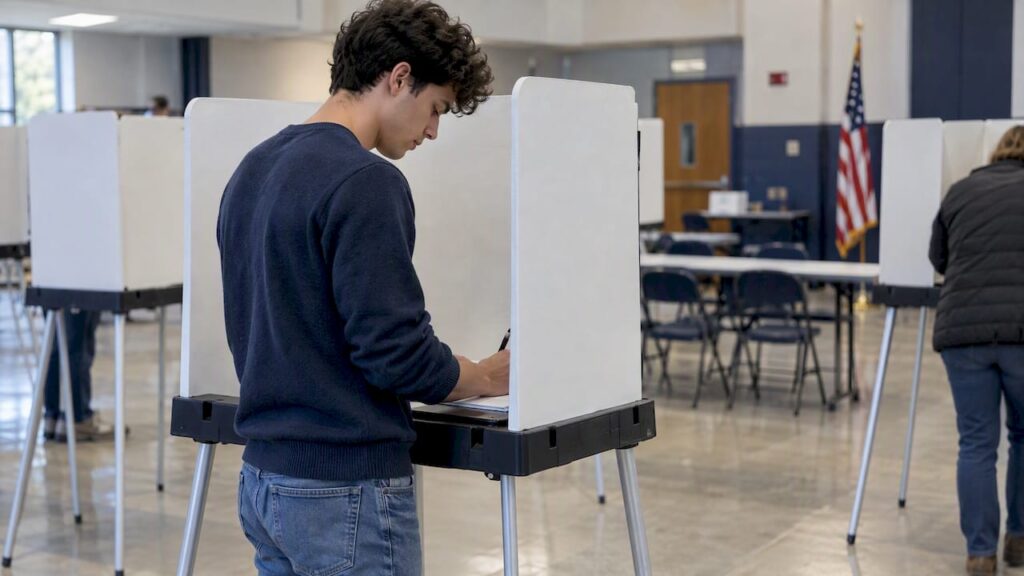
You can vote at your home address or your college address, but only in one place, and the rules differ by state. Do two things now: check your registration status online, and decide whether you need an absentee ballot or a plan for early or in-person voting. Tufts’ student voting research and the EAC voter guide show why early action matters, and we support school voting use cases at Izivote.
Key Takeaways
Register and vote early by understanding your options, deadlines, and technology to ensure your vote counts in student elections and beyond.
| Point | Details |
|---|---|
| Choose your voting address | Decide whether to register at your home or college, as you can only vote in one location. |
| Verify registration early | Check your registration status with your state’s official lookup and update it if necessary before voting. |
| Use secure voting methods | Use in-person, early, absentee, or online voting systems that match your situation and follow security guidelines. |
| Follow deadlines and rules | Be aware of registration, ID, and ballot return deadlines specific to your state to prevent disqualification. |
| Promote digital voting participation | Increase voter engagement through reminders, candidate information, and easy-to-access online platforms. |
Table of Contents
- How do you register to vote as a student?
- Which voting method fits your situation?
- What deadlines and residency rules apply to you?
- How do you check your registration and prepare your ID?
- What should you do if you’re away from home?
- Where can you find campus help?
- Why does student turnout matter?
- What is the six-week checklist before an election?
- How do electronic and online voting systems work?
- How do you protect voter privacy and ballot secrecy?
- What role do mobile and online platforms play in student elections?
- What challenges come up in online student voting, and how do you solve them?
- How can student organizations boost digital voting participation?
- What legal considerations apply to digital student voting platforms?
- FAQ
- Sources
How do you register to vote as a student?
You have two cross-state options. Many states let you register online, and the National Mail Voter Registration Form is another option. Both lead to the same place: a spot on the rolls for the address you choose.
The choice of address matters. Vote that you may only vote in one jurisdiction, and registering in two states is a federal crime. Your pick also shapes which local races and ballot measures you see. The guidance for college students adds that you can usually register at home or where you attend school, depending on state residency rules.
Have these ready:
- Your full legal name and date of birth
- A street address, not a campus mailbox, for your residence
- Your driver’s license or state ID number, or the last four digits of your Social Security number where required
- A mailing address if your mail goes somewhere different
After you submit, look for a confirmation message or a card in the mail. If nothing arrives, call your local election office and ask them to verify.
Which voting method fits your situation?
Voting options include Election Day voting at an assigned polling place or vote center during set hours. Many states also offer early in-person voting, often with extended hours at central locations. The EAC voter guide covers hours, polling place services and absentee procedures.
Absentee or mail voting works when you will be away. Eligibility rules vary by state, so confirm yours, then request your ballot through your state or local election office.
Mail ballots are easy to get wrong. NSLVE’s national data notes that ballots can be rejected for these reasons:
- A missing signature
- Missing ID details where a state requires them
- Incorrect postage
- Missing witness or notary information in states that require it
Mail ballots can be rejected over a missing signature, bad postage or missing witness details. Read every line of the instructions before you seal the envelope.
A provisional ballot is a fallback. Poll workers offer one when your name is not on the rolls or your eligibility is in question. Election officials later check your registration, and your ballot counts if they verify it. Ask how to track its status.
What deadlines and residency rules apply to you?
There is no national registration deadline. NCSL’s deadline tracker shows that some states allow same-day registration through Election Day, while others close registration up to 30 days before the election. That gap can catch students, especially those who move between a campus and a hometown.
Use this rule of thumb for residency:
- If you will be physically on campus when voting happens, registering at your college address usually makes sense.
- If you will be home, or you want your hometown ballot, register there and vote in person or by mail.
- If you are unsure, look up your college state’s residency rules before you switch. Some states set time requirements.
- Never register in two places.
Where do you find the exact rules? Start with your state election office. The EAC state summaries link to each office and list tools for registration lookup, absentee and early voting information, and polling place search. Check these pages early, because options after a missed cutoff vary by state.
How do you check your registration and prepare your ID?
Verify your status before you rely on it. Use your state’s official lookup, which the EAC state pages link to. Check the lookup for your registration status and any details it provides, such as your address or polling place. A missing or outdated record is something you can still fix if you act early.
- Open your state lookup and enter your name and date of birth.
- Confirm your address matches where you want to vote.
- Note your polling place and early voting sites.
- Check your state’s ID rules in the EAC voter guide.
- Set aside an accepted ID.
Acceptable ID differs by state, and some states do not accept a student ID. If your name or address does not match the rolls, update your registration, ask for a provisional ballot at the polls, and follow up with the local election office.
Pro Tip: Take a photo of your registration confirmation and your ID so you can fix mismatches quickly.
What should you do if you’re away from home?
You have three main options, as Vote.gov’s student guidance describes them:
- Register in your college state if you qualify.
- Vote absentee from your home state.
- Travel home to vote in person.
Check your college state’s rules before switching registration, since some states set residency time requirements. The EAC voter guide is a good reference for absentee procedures.
If you choose absentee, treat the mail as the weak link. Request your ballot early and confirm when it should arrive. Use a mailing address that reliably receives your mail, return it with time to spare and track it if your state offers that feature. Study abroad students face the same steps, with longer mail times, so they should start earliest.
Where can you find campus help?
Look to your student government, your civic engagement office and campus toolkits. The All In Campus Democracy Challenge reports that campuses with formal, nonpartisan voting plans and coalitions see turnout at least 5 percentage points higher than campuses without them. Institutionalized programs work because they remove barriers instead of relying on individual effort.
Simple actions help:
- Pledge to vote and ask friends to do the same.
- Find a ride to the polls or organize a group trip.
- Volunteer as a poll worker.
- Use your campus voter toolkit for deadlines and reminders.
Why does student turnout matter?
Students already show up in meaningful numbers, yet a gap remains. In 2024, 76% of eligible college students were registered and 53% voted, a 70% yield among registered students. That means some registered students still did not vote, often because of logistics like ID, transportation or ballot submission.
Campus structure matters, as All In’s impact data suggests. The habit starts earlier too. Research on internal campus elections reports that turnout is often under 20% and sometimes under 10% for student government contests. Voting in the races closest to you builds the routine that carries into national elections.
What is the six-week checklist before an election?
Work backward from Election Day. The sooner you verify, the more options you keep.
- Verify your registration and address well before Election Day, using your state lookup.
- Decide where you will vote, home or college, and register or update if needed.
- Request an absentee ballot now if you will be away.
- Confirm your ID matches your state’s rules.
- Locate your polling place and early voting hours, then arrange transportation.
- Return a mail ballot early, or vote in person, and track your ballot where possible.
Pro Tip: Put each step in your phone calendar with a reminder, working backward from your state’s deadline.
How do electronic and online voting systems work?
Online voting for campus elections follows a simple flow. An organizer builds a ballot, eligible voters receive a link or sign in, each voter marks choices, and the system records one vote per eligible person before closing at a set time. Results then appear in an administrator’s dashboard.
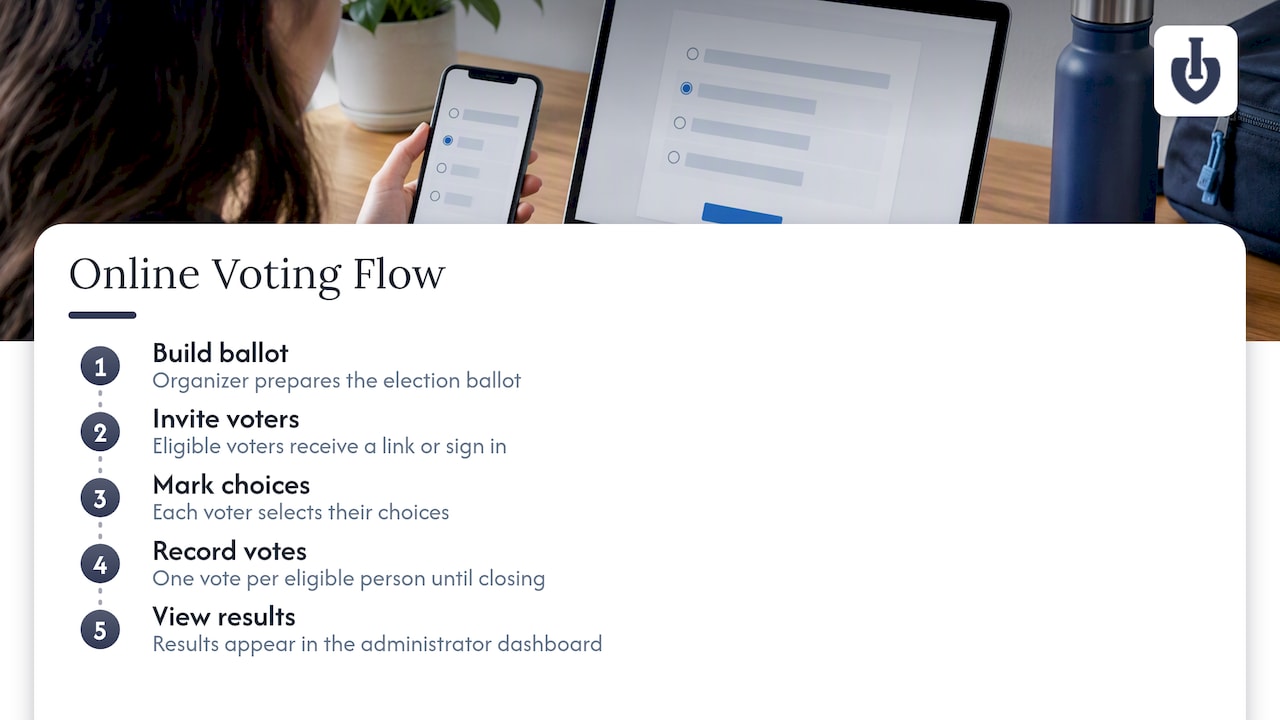
Security rests on several layers. Encrypted connections protect data in transit, so choices cannot be read between your device and the server. Authentication controls who gets in, which might be a school login, a unique code or a verified identity. Limits on repeat submissions guard against duplicate votes, and activity logs help administrators spot unusual patterns.
Different elections need different safeguards. A high-stakes student government race should require sign-in tied to enrollment. A casual poll, like picking a mascot, can use lighter checks. We offer several voting modes at Izivote, including open, login-based and identity-based voting, so organizers can match the control level to the stakes. See our feature list for what each mode supports.
Ask a few questions before choosing any system. Who can see raw responses? How is eligibility checked? What happens if a voter loses connection mid-ballot? Clear answers to these three questions tell you most of what you need.
How do you protect voter privacy and ballot secrecy?
Ballot secrecy means nobody can link your name to your choices. In student elections, that promise is easy to break by accident, for instance when a shared spreadsheet pairs email addresses with responses. A trustworthy setup separates the identity check from the ballot itself.
Practical protections include:
- Collecting only the data needed to confirm eligibility
- Showing candidates and administrators aggregate results, never individual ballots
- Limiting who can open the administrator dashboard
- Setting a retention period and deleting voter data after certification
- Telling voters in plain words what is recorded
Candidates and their friends should never see how any individual voted. Leaders who run the election should avoid pressuring peers to vote in front of them, since public pressure undermines the secret ballot as much as any technical flaw.
Transparency and secrecy can coexist. Publishing totals, vote counts per category and the election’s rules lets everyone trust the outcome without exposing anyone’s choices. If a platform offers an audit trail, confirm that it logs events like ballot submissions and closing times, not the content of each voter’s selections.
When you evaluate a tool, read its privacy statement before launching. A short, specific statement beats a long, vague one every time.
What role do mobile and online platforms play in student elections?
Students live on their phones, so a ballot that works well on a small screen removes a major barrier. A mobile-friendly platform lets someone vote between classes, from a dorm or on a commute, rather than hunting for a polling table. That convenience can matter for commuter students, night students and those on remote placements, who may not regularly cross the quad.
Purpose-built platforms also save organizers effort. Instead of printing ballots and counting by hand, leaders set up categories, add candidate photos and profiles, and share a link. Live dashboards show participation as it grows, so a club president can see whether a reminder is needed before voting closes.
We built Izivote for this kind of work. Organizers can launch a vote quickly, embed the voting page on a school site, use multiple categories and rely on automatic closing at a set time. Our student elections page shows how schools and student government use it, and you can try it by creating a vote on our free create page.
Platforms do not replace outreach. A clear ballot only helps if students know the vote exists, so pair the tool with announcements, posters and reminders.
What challenges come up in online student voting, and how do you solve them?
Three problems show up most often: proving who is voting, stopping repeat votes and keeping everyone informed.
Authentication is the first. If anyone with a link can vote, results are easy to distort. The fix is to match the check to the stakes. Use school sign-in or identity-based voting for official elections, and keep open voting for informal polls.
Multiple voting comes next. One person can submit many ballots from different devices or accounts. Solutions include one-ballot-per-account rules, limits per device or connection, and review of unusual spikes in activity. Always decide your rules before voting opens and publish them, so nobody argues about fairness afterward.
Access is the third. Students without reliable internet, or with disabilities, may struggle with a digital ballot. Offer a campus computer lab or an in-person alternative, and test your ballot on small screens.
Other pitfalls are easy to avoid:
- Confusing ballot wording that splits votes between similar options
- Unclear deadlines that cause last-minute complaints
- No plan for disputes or recounts
Write a one-page election plan that covers eligibility, authentication, timing and what happens if something goes wrong. Having that plan ready is often the difference between a smooth election and a messy one.
How can student organizations boost digital voting participation?
Participation grows when voting feels easy, visible and social. Start with timing: announce the election well ahead, repeat the date, and send a reminder on the day. Short messages with a direct link can be easier to act on than long explanations.
Make the candidates easy to know. Post short profiles with photos and a sentence on what each person will do. Hold a quick Q&A or livestream so students can ask questions. People vote for someone they recognize.
Use the channels students already read. Class group chats, club newsletters, campus social accounts and a spot on the student portal each reach a different audience. Ask professors to mention the vote in class, which may reach people who do not see a poster.
Build momentum with a few simple tactics:
- Set a participation goal and share progress
- Run friendly competition between residence halls or clubs
- Consider a fair incentive, such as a campus event raffle, if school rules allow
- Thank voters afterward and share the results
Links to our blog on online voting guides offer more ideas for running engaging votes. Above all, report the outcome and what leaders will do with it. Students vote again when they see that their ballots led to something.
What legal considerations apply to digital student voting platforms?
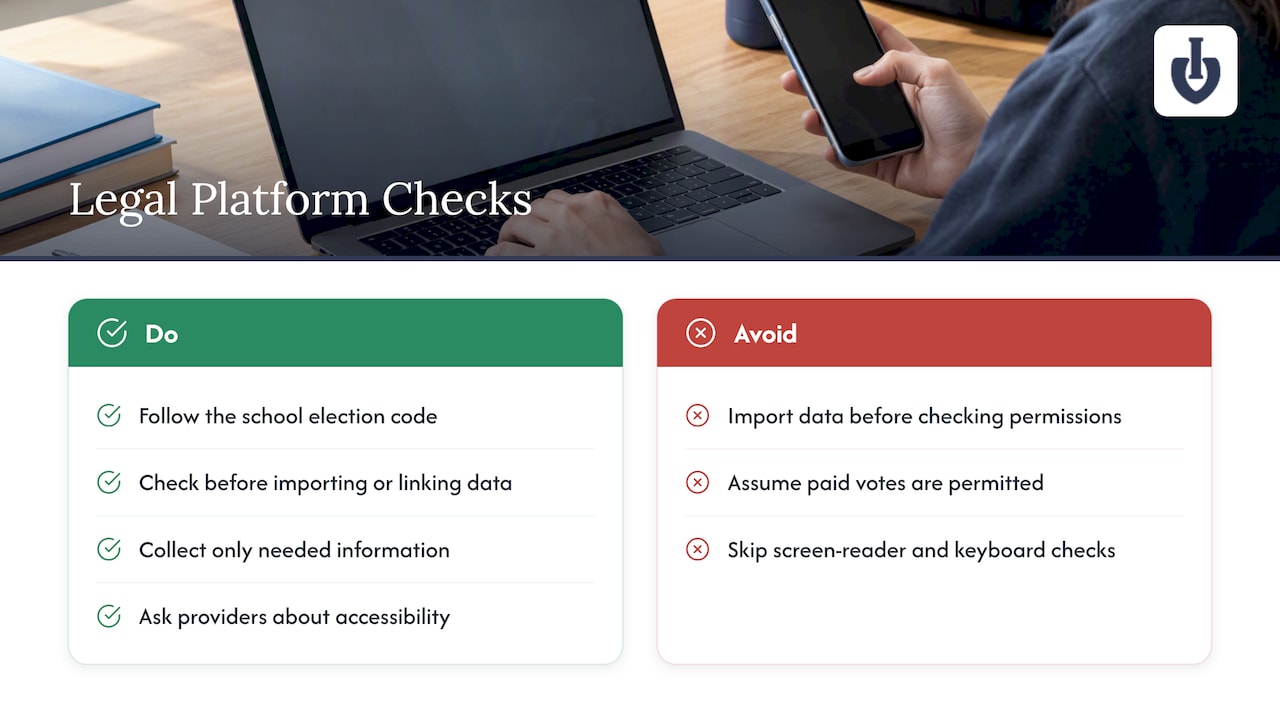
Student elections are not governed by the same laws as public elections, but they still carry rules. Your school’s student government constitution and election code usually set who may vote, who may run and how disputes get resolved. Start there, and follow it precisely, since a technical breach can invalidate a result.
Data protection is the other major area. Student information can be sensitive, and many schools restrict how it is shared. Before importing a roster or linking a student login, check with your administration about what is allowed. Collect only what you need and be clear about how it will be used.
If a vote involves payments, such as a fundraiser with paid votes, extra rules may apply. Our paid voting adds a 10% platform fee per vote, as listed on our pricing page. Confirm with your school whether paid voting is permitted for official elections, since many institutions treat official student government races differently from charity contests.
Accessibility matters too. A ballot should work with screen readers and keyboard navigation so every eligible student can take part. Ask any provider about accessibility before you commit.
None of this replaces advice from your school. Speak to your student affairs office or an advisor if you are unsure, and keep written records of your election rules and decisions.
FAQ
What is the deadline to register to vote as a student?
There is no national deadline. Some states allow same-day registration, while others require registration up to 30 days before the election. Check your state election office early.
Can I vote at my college address or my home address?
You can usually choose either, depending on state residency rules, but you may vote in only one place. Registering in two states is a federal crime. Pick the location where you will be present, or vote absentee from the other.
How do I vote if I’m away at school?
Register in your college state if you qualify, request an absentee ballot from your home state, or travel home to vote in person. Request mail ballots early. Read the instructions closely, since missing signatures or witness details can lead to rejection.
Does my student ID count as voter ID?
It depends on the state. Some states accept a student ID and some do not, so check your state’s rules in the EAC voter guide. Bring a second accepted ID if you are unsure.
What if my name is not on the voter list at the polls?
Ask for a provisional ballot. Election officials check your registration afterward and count the ballot if they verify it. Follow up with your local election office.
Sources
- Circle
- Ojed
- Ncsl
- A Voter’s Guide
- 2024 National Data | National Study of Learning, Voting and Engagement
Recommended